


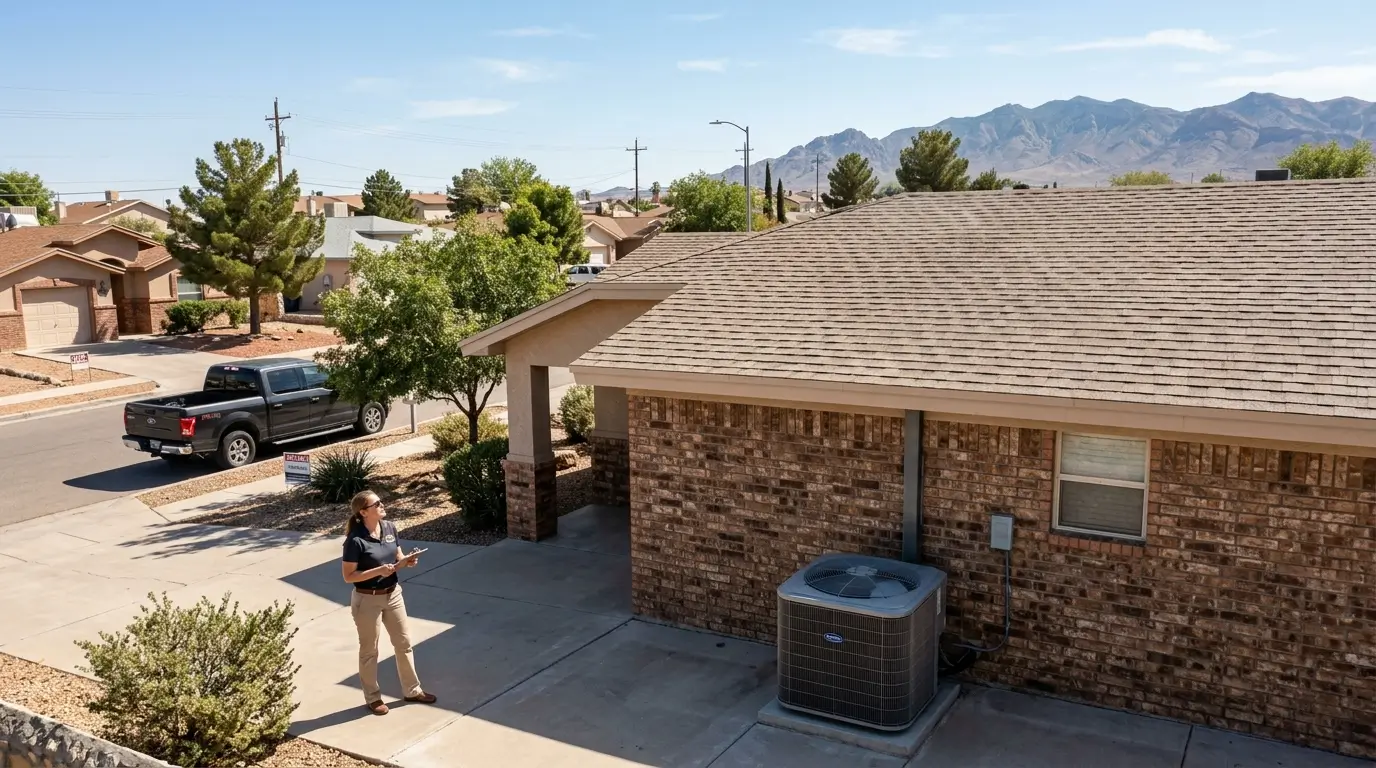
Ask a landlord in most parts of the country what kind of AC their rental has, and the answer is almost always some version of central air. In El Paso, that question actually has two real answers, since a meaningful share of the area's older housing stock still runs on evaporative cooling rather than refrigerated air. Understanding the tradeoffs between the two matters more here than in almost any other rental market.
Key Takeaways
Evaporative coolers, commonly known as swamp coolers, cool air by pulling it through water-soaked pads, a method that works well specifically in low-humidity climates like El Paso's.
Refrigerated air, what most people think of as standard central air conditioning, delivers consistent cooling regardless of humidity but costs more to install and operate.
El Paso's monsoon season, typically running from July through September, is when swamp coolers struggle most, since rising humidity reduces how effectively they cool.
Swamp coolers require more frequent, hands-on seasonal maintenance, including pad replacement and mineral buildup cleaning, while refrigerated air needs less frequent but more specialized professional service.
Knowing which system a rental property has changes what maintenance schedule, utility cost expectations, and lease language actually make sense.
How Each System Actually Works
An evaporative cooler pulls hot, dry outdoor air through pads soaked in water. As that water evaporates, it cools the air before a fan pushes it into the home. It's a mechanically simple system, no compressor, no refrigerant, just a fan, a water pump, and pads that need regular upkeep.
Refrigerated air, what most people simply call central air conditioning, works through a refrigerant cycle that actively removes heat from indoor air and transfers it outside, delivering precise, thermostat-controlled cooling regardless of what the humidity or temperature looks like outdoors.
Why El Paso's Climate Makes This Decision Different
El Paso's hot, dry climate is close to ideal for evaporative cooling, which is exactly why so many older properties in the area were built or retrofitted with swamp coolers rather than central air. Evaporative systems use dramatically less electricity than refrigerated air, since they rely on a fan and water pump rather than an energy-intensive compressor, and they typically cost significantly less to install in the first place. For a rental property, that translates into lower utility bills for tenants and lower upfront equipment costs for owners, which is a real advantage in a market where rent affordability matters to both sides.
The Monsoon Season Problem
The tradeoff shows up every summer during El Paso's monsoon season, typically running from July through September. As humidity rises during this stretch, evaporative cooling becomes measurably less effective, since the air is already closer to saturated and can't absorb as much additional moisture.
A swamp cooler that kept a unit comfortable through the dry heat of June can struggle noticeably once monsoon humidity arrives, which is exactly when tenant complaints about cooling tend to spike. Refrigerated air doesn't have this limitation, since it cools consistently regardless of outdoor humidity, which is the core reason some owners choose to convert older swamp-cooler properties once the system needs major repair or replacement anyway.
Maintenance Obligations Differ Significantly
The two systems ask for genuinely different kinds of upkeep. A swamp cooler needs its cooling pads cleaned or replaced periodically, its water lines checked for mineral buildup and algae, and a seasonal shutdown before winter freezes damage the water system, followed by a spring startup before cooling season begins again. This work doesn't require a specialized HVAC technician the way refrigerant work does, but it does require someone paying attention to the calendar and actually doing it.
Refrigerated air needs less frequent attention, generally an annual professional inspection covering refrigerant levels, coil cleaning, and filter changes, but that service does require a licensed HVAC technician rather than routine handyman work. Our maintenance team tracks which cooling system each property has specifically because the two require entirely different service schedules and vendor relationships.
What This Means for Tenant Satisfaction and Utility Costs
Tenant expectations differ depending on which system a property has, and setting those expectations clearly upfront avoids a lot of avoidable friction. A tenant moving from a refrigerated-air apartment into a swamp-cooler property should understand that utility costs will likely be lower, but cooling performance will drop noticeably during monsoon season, something worth addressing directly in the lease or move-in materials rather than letting a tenant discover it independently in July. The reverse is also true: a tenant used to a swamp cooler's low utility bills may be surprised by a refrigerated-air unit's higher electric costs, even though the cooling itself is more consistent.
Deciding Whether to Convert an Older Property
For owners holding a property with an aging swamp cooler, the conversion decision usually comes down to how the unit is currently performing and what the property's target tenant base actually values. A swamp cooler nearing the end of its service life, generally past the 10-year mark, is often facing a repair-or-replace decision anyway, which makes that the natural moment to evaluate whether converting to refrigerated air makes financial sense given the property's rent level and tenant expectations.
Converting typically requires new ductwork and a dedicated electrical circuit, a real upfront cost, but it can also make a property more competitive for tenants who specifically prioritize consistent, humidity-independent cooling over a lower utility bill. Weighing that upfront cost against likely rent gains is exactly the kind of analysis worth running with our property management team before committing to a conversion.
FAQ
Why do so many older El Paso properties still have swamp coolers instead of central air?
El Paso's dry climate makes evaporative cooling genuinely effective for most of the year, and swamp coolers cost significantly less to install and operate than refrigerated air, which made them a practical, popular choice for decades of local construction.
Do swamp coolers stop working entirely during monsoon season?
Not entirely, but their cooling effectiveness drops noticeably as humidity rises, since the air is already closer to saturated and can't absorb much additional moisture through the evaporation process.
How often does a swamp cooler need maintenance compared to central air?
Swamp coolers need more frequent, hands-on attention, including pad replacement and seasonal shutdown and startup, while refrigerated air typically needs a single annual professional inspection but requires a licensed technician for that service.
Should I convert an aging swamp cooler to refrigerated air?
It depends on the unit's current condition and your target tenant base. A swamp cooler nearing the end of its service life is often the natural moment to evaluate whether refrigerated air's higher upfront cost makes sense for that specific property.
Matching the Cooling System to the Property and the Tenant
Neither swamp coolers nor refrigerated air is universally the right choice for an El Paso rental, they simply serve different priorities around cost, consistency, and maintenance effort. Understanding which system a property actually has, and setting the right expectations with tenants about what that means for comfort and utility costs, protects both tenant satisfaction and your maintenance budget.
Reach out to our property management team if you'd like help evaluating whether a specific property's current cooling system still makes sense, or whether it's time to consider a change.